Friday, February 20, 2015

Visit 6: What is art? Experimenting with 3-D materials


On the sixth visit we talked about what art is and how artists use non-traditional materials. I asked the students how they would define art. They generally agreed that art was something creative that expressed your feelings. I told them that some people have different definitions of art and that throughout history there have been many arguments about what art is. We discussed two works that have been seen differently over time based on culture changes and that they could still been seen in different lights today.We talked about Vincent Van Gough's Stary Night. 
Today it is revered but in his time it was seen as poor painting. Today people who value emotions in painting respect Van Gogh's work highly. However, formalists might argue that it is a lesser painting for trying to be emotional and depictive. We then went back to the greek pottery we had learned about before.

 
I pointed out that some people do not see anything functional as art where as the greeks used these pots everyday and made no distinction between art and craft.
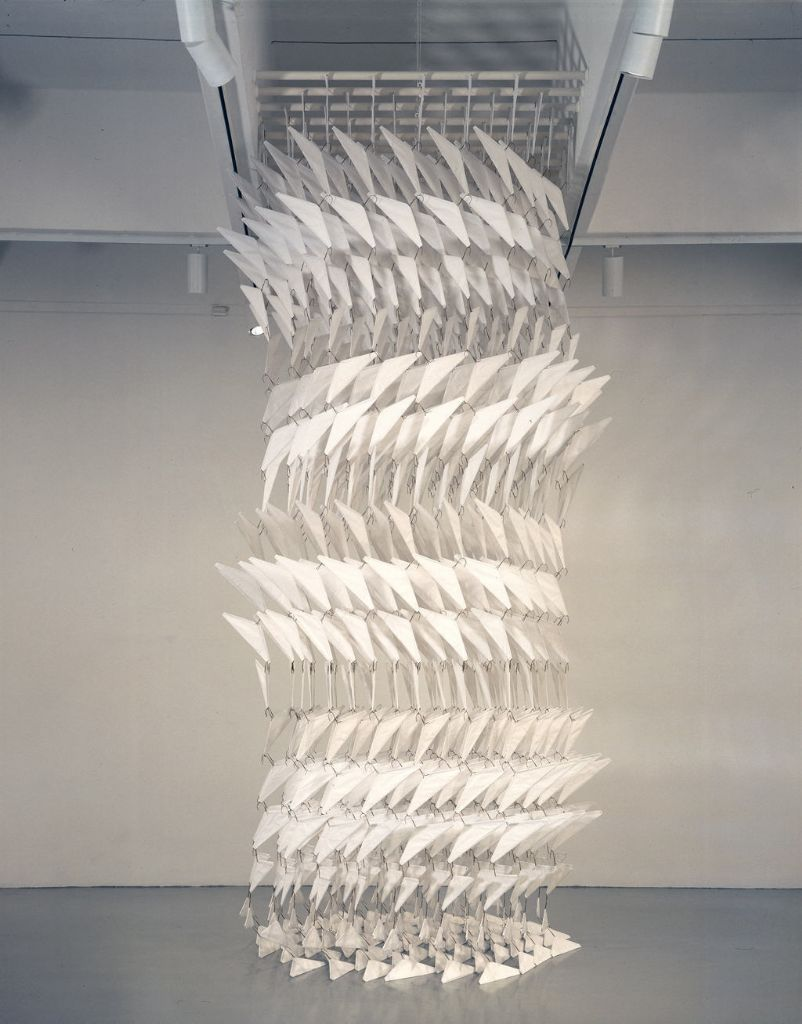
I then asked if art has to be made by the artists to be art. We talked about installation art with Tara Donovan and Dan Steinhilber.
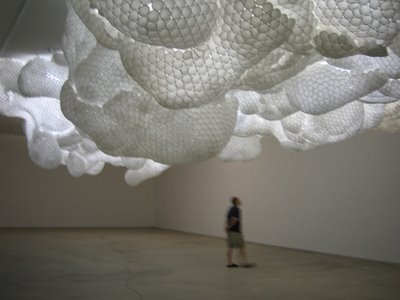
Tara Donovan Dan Steinhilber
I told them that often installations are done by museum workers and that the artist sends the plans for the work but does not physically create it.

We then examined the materials used by Donovan and Steinhilber. The students where shown many pieces of these artists' work and asked to guess what material was being used in each. We talked about the cheapness of the materials used and how what you do with materials can transform them.


With the remaining time students were challenged to make as many different thing as they could out of plastic straws and post-it notes. They were going to use these materials the next time and they need to figure out how to attach them, how to change their shapes, and what other materials they could use in order to make a sculpture the next time.

Wednesday, February 11, 2015

Visit 5: Watercolor Forrests

For my fifth visit to Mrs. White's class I helped the students finish paintings of aspens that they started with her earlier this semester. I talked with students about creating dimensionality by curving the horizontal marks on the tree bark and painting one side of the tree darker and the other lighter depending on the position of a light source.

Tuesday, December 9, 2014

Visit 4: Painting Quintessential Utah

On my fourth visit we picked up where we left off the week before. Students came prepared to start their quintessential Utah paintings. The kids chose subject matter that varied from logos, to landscapes.
The kids chose subject matter that varied from logos to landscapes to a colored map of the state.


When students finished they were invited to come to the front of the room display their work and explain to the class why they chose that image to paint. Students painted what they were able to see in their own backyard and well as state landmarks and their parents' alma mater.


 Mrs. White also joined us in painting with wet on wet depictions of Utah mountains.


Tuesday, December 2, 2014

Visit 3: Quintessential Place and Watercolor

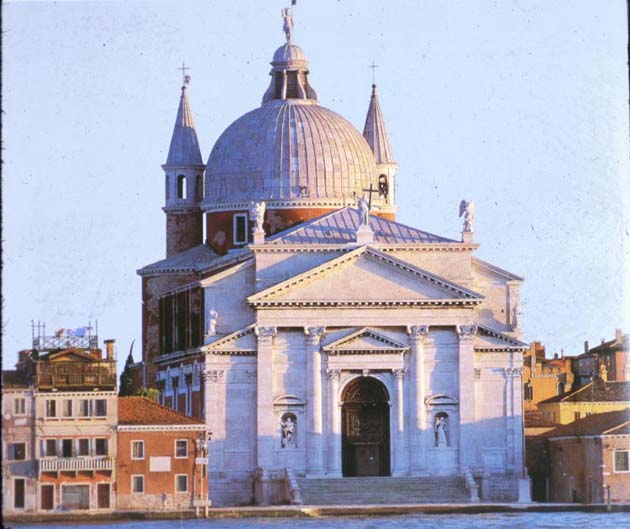
On my third visit we talked about the meaning of the word quintessential. We talked about places and what makes them important or memorable. I presented some artists, contemporary and historical, that used the importance of places in their work.

Brian Hutchison


Palladio

I demonstrated four water color techniques that the students practiced with me on their own papers. We talked about wet on wet, wet on dry, wash, and dry brush. 
In preparing for my next visit students were asked to think of what was quintessentially Utah.

Tuesday, November 18, 2014

Visit 2: Greek Pottery and Silhouettes

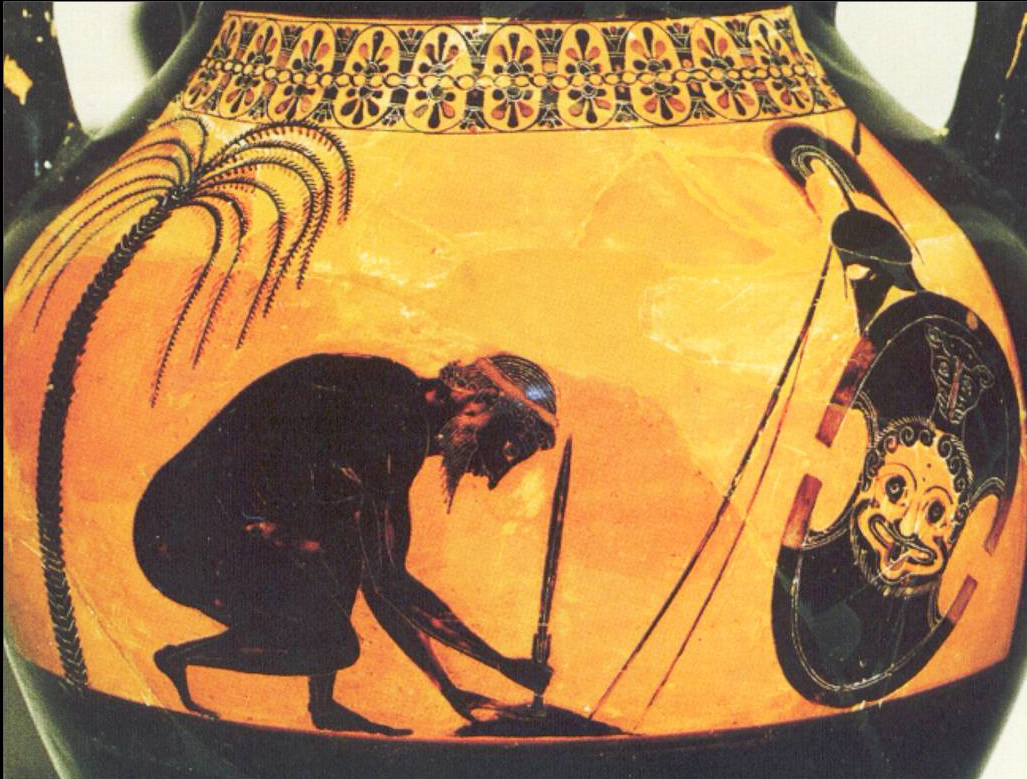
The second time I visited Mary White's class we talked about greek pottery and silhouettes. I started out by having each student write down a life changing event. Then I told them the story of Ajax.
The Suicide of Ajax.

We talked about how in early greek pottery the artists would depict the moment just before the action of the climax of the story. It the story of Ajax this moment is right before he throws himself on his sword.
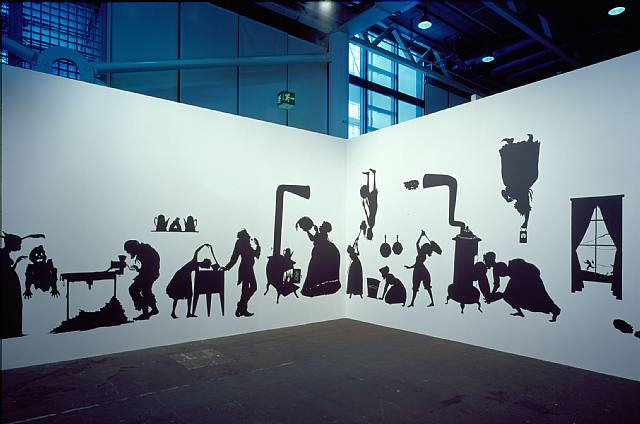
We then talked abut silhouettes and how artists in ancient Greece and today use them to simplify dramatic images. I showed the students this work by Kara Walker as an example of a contemporary artist using silhouettes.

The students sketched a picture that illustrated the life story they had written down. They filled in their sketches with sharpie to create silhouettes. At the end some students explained the pictures that they drew including one boy who shared the experience of his father going away to fight in Iraq. 

Saturday, October 25, 2014

Visit 1: Tessellations


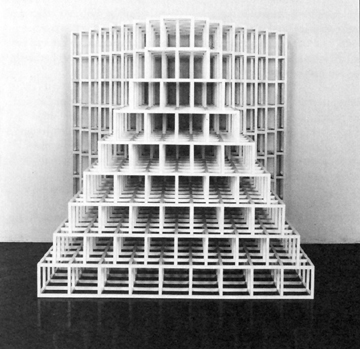
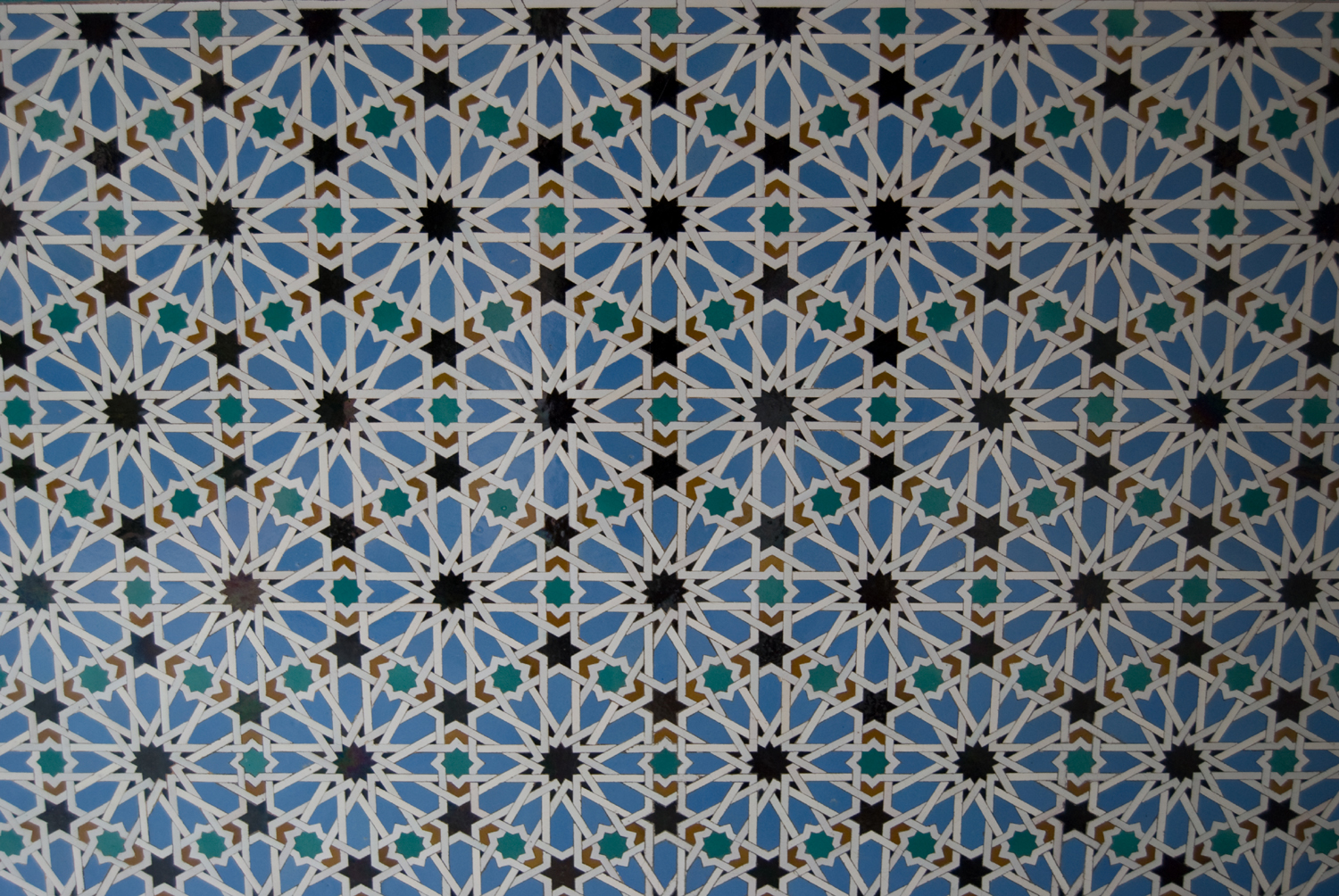
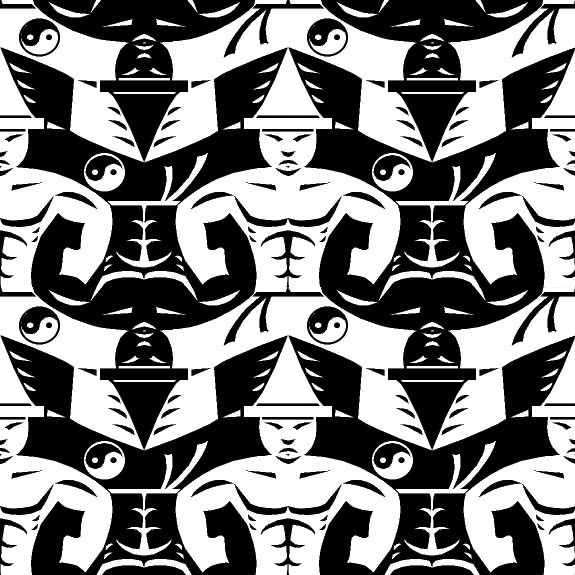
On my first visit to Marry White's class we learned about tessellations. I discussed with the class what tessellations were and how artists have used the throughout history. We looked at Islamic tile patterning, Sol LeWitt sculptures, and M.C. Eshcer drawings.
http://www.radford.edu/rbarris/art428/lewisttcubestructure.jpg   http://www.vhinkle.com/islam/starpolygon3.jpg   http://fc05.deviantart.net/fs31/f/2008/195/7/7/Karateka_by_Hop41.jpg
Then I demonstrated how to make a simple shape that can tessellate. The students each then made their own tessellations. They outlined their shapes in marker and filled in their drawings with colored pencil.

One student made his abstract shape into an animal by adding detail.